

Differences of 3 Thermal Spray Coatings for Boiler Tubes in Power Plant
1. Principles
Nickel-Chromium Alloy Coating
Nichrome alloys can form dense chromium oxide surface thereby preventing further oxidation of the metal when it is in the process of heating and oxidation, because Ni-Cr alloys will selectively oxidize due to the considerable affinity of chromium and oxygen. The most frequently used materials are NiCr 80/20 and NiCrTi. Generally, different chromium percentages could lead to diverse performance on oxidation resistance. When the chromium exceeds 20%, Ni-Cr alloys can form continuous and dense chromium oxide protective film in high temperature environment. Once the oxide film is destroyed, the chrome oxide film forms again because of the high ratio of chromium in the alloy, which causes very slow speed of oxidation. NiCrTi (equal to 45CT), as a typical example, is made of nickel-chromium alloy by adding a small amount of titanium element. It is widely used in high-temperature and corrosion-resistant application.
Iron-Chromium-Aluminum Alloy Coating
Chromium can improve the oxidation of iron in FeCrAl alloy, because chromium is more easily oxidized than iron. Compared to base metal iron, chromium-rich oxide is not only better at oxidation but also better at the oxidation protection. Another effect of chromium in FeCrAl alloy is that it will generate Cr2O3 film. This film has very dense structure that contributes to excellent corrosion resistance.
2. Structures
All the three coatings have small-scale particles, dense coating, and low porosity rate. NiCrTi and NiCr 80/20 coatings are denser than FeCrAl under the same magnification (X500).
3. Functions
1) Corrosion Resistance
FeCrAl < NiCr 80/20, NiCrTi
High temperature corrosion resistance of FeCrAl can be improved by spraying aluminum coating on the FeCrAl coating.
2) Thermal-shock Resistance
NiCr 80/20 < FeCrAl < NiCrTi
3) Erosion Resistance
FeCrAl > NiCr 80/20, NiCrTi
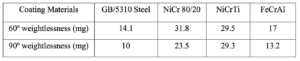
4) Bonding Strength
NiCr 80/20 < FeCrAl < NiCrTi (slightly different)



Leave a Reply
Want to join the discussion?Feel free to contribute!